Reassembling, not dissembling
Nano Banana Pro gave my 2006 production photos that shot-yesterday look — until I read the T-shirts. When does modernising old work misrepresent it?
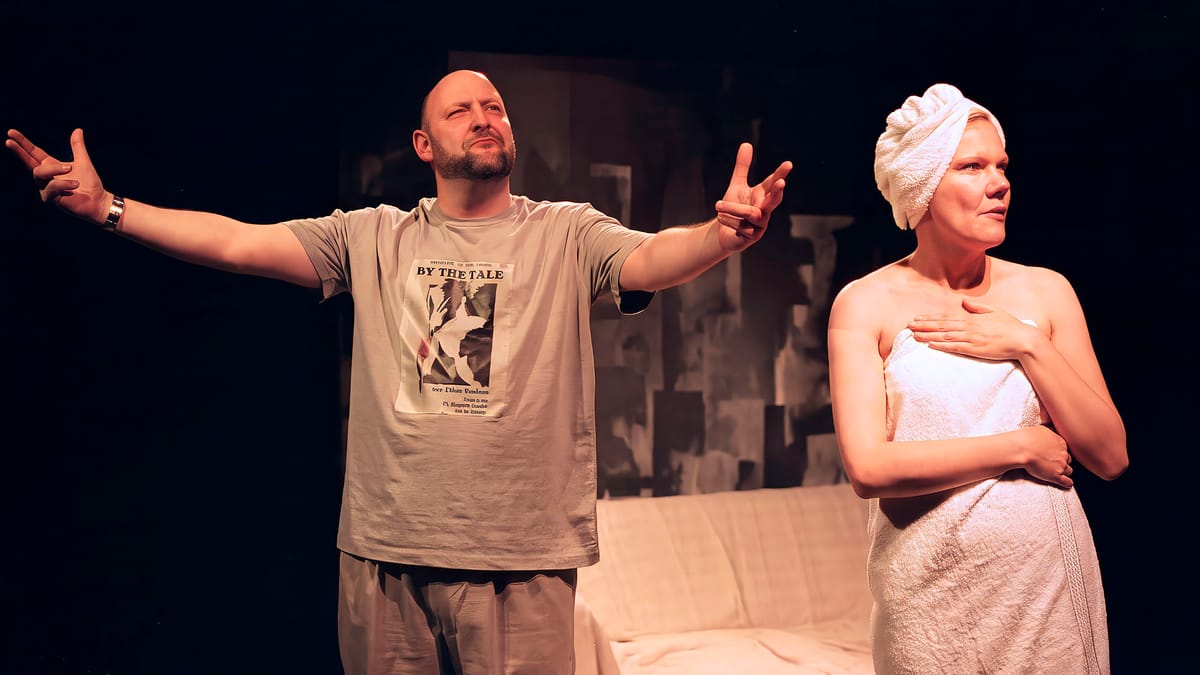
Twenty years ago, Theatre West produced my play Salt'n'Sauce at Bristol's Alma Tavern Theatre. I blogged about the production from my first meeting with the play's director to the end of its run. It was my first blog, though I'd kept journals before, just not online. Two decades on, I've archived my first blogging project on my current site, a process that made me wonder how truthful it is to adapt legacy work for the modern web.
The fully authentic way to preserve old blog posts is to leave them enshrined in their original markup. I'd been building websites for six years before I posted the Salt'n'Sauce blog in 2006, and I was still at the static stage — I had to create and upload individual pages with dozens of HTML tags, rather than type my posts in a web interface and hit ‘publish’.
My early markup still renders in modern browsers, and the Wayback Machine has archived my site, including the blog, as it stood in July 2007.
Sites from that era look very dated now. Before the iPhone, visitors viewed them mostly on desktop and laptop computers with smaller screens. On a 24" monitor, my early site is stranded in the centre of an expanse of display space where it used to fill the screen. On a mobile, it's minuscule, given that responsive design was still the future in 2007.
The point of archiving my old writings on my modern blog isn't to present them pixel-perfectly across the multitude of modern devices, but to include them in the context of a continuum of my work over the three decades my current site spans. It might feel more ‘authentic’ to preserve the old posts as they originally appeared, but they grow increasingly incompatible. I've also rescued my postgraduate essays from ancient WordStar files, which are now nearly inaccessible on modern tech. Sharing work only in its original form invites obsolescence, and I'm aiming to create a corpus, not a corpse.
Disingenuousness creeps in as soon as you start modernising old blog posts, though. My first step was to strip them of their original HTML tags. This leaves the text as a freshly malleable document, letting Grammarly unleash the blue underlining. I resisted the urge to rephrase my 20-year-old prose, except to add a judicious sprinkling of commas — the past is now better punctuated.
The qualms really kicked in when it came to the pictures. In the blog, I ‘joke’ that I photographed the dress rehearsal because ‘I wanted some of my distinctive grainy and blurry pictures as a memento.’ I'd tell anyone offering constructive criticism about these qualities that they came from shooting in low light. The grain came from using fast (more light-sensitive) film, and even then I still needed a relatively slow shutter speed, meaning any movement from the performers produced the ‘distinctive’ blur.
Since I first posted my Salt'n'Sauce production shots in 2006, I've tried to compensate for these shortcomings by manipulating digital scans of the negatives with assorted software. In 2006, I had the processing lab scan the negatives, then neglected them because I had the image files. When I rescanned them in higher resolution a few years later, they were scratched and dirty, and the new scans bore the battle scars. I ran ‘Gemini 3 (with Nano Banana Pro)’ in Photoshop 2026 over my pick of the higher-res scans, and the results were startling — they came up pin-sharp and noise-free as if they'd been taken yesterday on a modern DSLR camera rather than 20 years ago on my old Minolta 9000 35mm film workhorse.
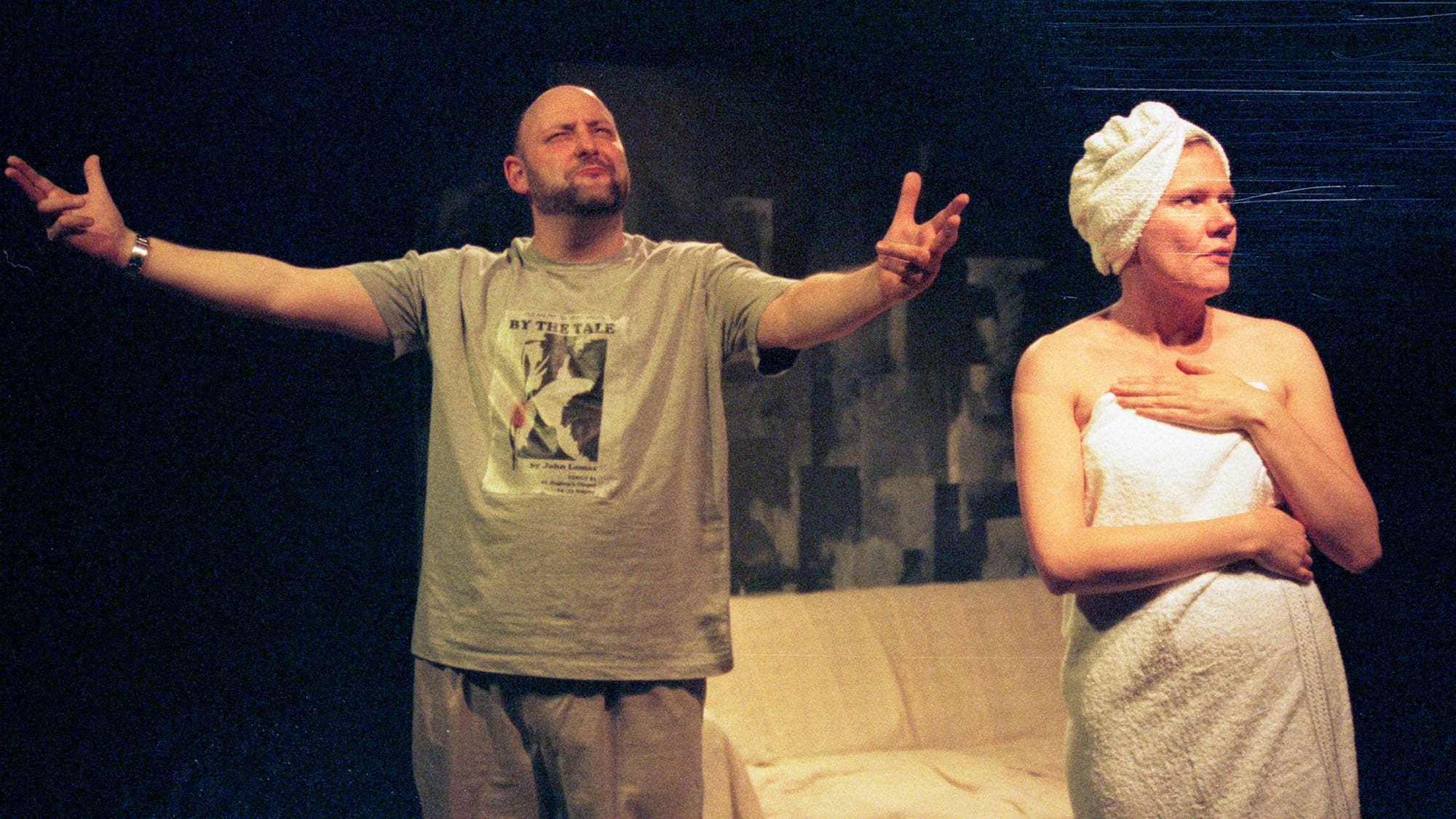
I eyed the apparently box-fresh images sceptically. I wanted the pictures enhanced but not embellished — an overall rule for the revamped blog posts. I clicked repeatedly between the raw scans and their AI makeovers, finding few substantive differences beyond improved clarity. In places, the AI had interpreted marks on the negatives as part of the pictures, so I used Photoshop's ‘spot healing brush’ tool to retouch them. Back on familiar ground with this longstanding feature, I settled into thinking the AI enhancement was just an advance on the image manipulation I'd always done — another phase in ongoing efforts to present my pictures at their best. I uploaded the AI-improved images to bring my Salt'n'Sauce blog into the 2020s.
Then I noticed the T-shirts.
The play is set at the Edinburgh Festival Fringe, where its characters are staging a play called By the Tale. The T-shirts show the title of the play-within-the-play, along with the fictional author's name and Fringe venue details. The author's name is discernible in the unprocessed scans, although the smaller text dissolves into the blur and grain. Applying the Nano Banana Pro treatment greeks all but ‘BY THE TALE’.
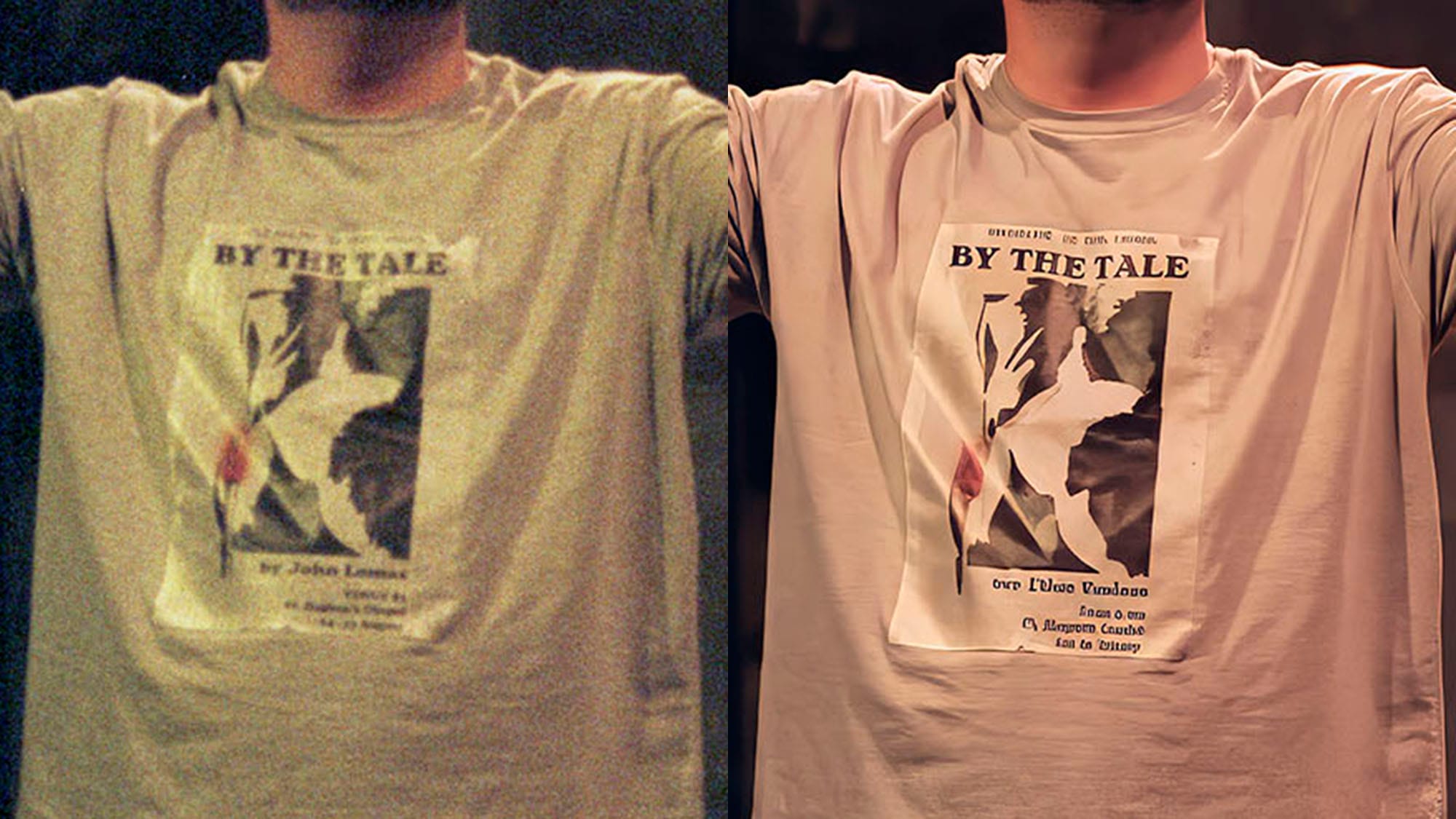
This took a little of the sheen off the pictures' fresh, high-gloss AI polish. The text is a minor detail in improved versions of images that otherwise render their sources faithfully. Those who spot the small AI aberration might question the authenticity of the affected images and the others in the set. Deploying pictures treated with Photoshop's latest feature didn't feel quite honest.
I considered photoshopping the pictures the pre-AI way but decided that even if I spent hours on each one, I couldn't improve it to anywhere near the quality Nano Banana Pro achieved in a few moments. The artifice of either approach confirmed that no version of the images objectively reflected the show. The unmanipulated files highlight technical weaknesses rather than illustrating the posts they appear in, while the AI-enhanced versions, despite the rewritten T-shirt text, represent the show better. You had to be there to know what it was really like.
Proximity to sources remains important, since this is likely to be an ongoing process. Future versions of Photoshop might let me upgrade my images with all the original detail intact. The source for subsequent revisions will again need to be the original scans, not the current reworkings. Second-generation updates will bake in the discrepancies, causing the images to mutate and push them even further from the original.
This drift is more obvious with pictures than with text, where the temptation to rewrite risks losing the immediacy of the initial posting. Inevitably, looking back on your writing reveals room for improvement, but giving in to the urge to rewrite can make you sacrifice the authenticity of the words you wrote in the moment in pursuit of better expression. While later revisions might produce more polished prose, the original best captures that moment because it comes from that time. Even a few commas could contribute to the drift, but I couldn't resist.
Keeping legacy work in a current format demands hands-off discipline, though, to ensure that you're reassembling, not dissembling.
Find my Salt'n'Sauce production blog.